
Art stylesRetroLimited paletteHigh contrast
Pixel
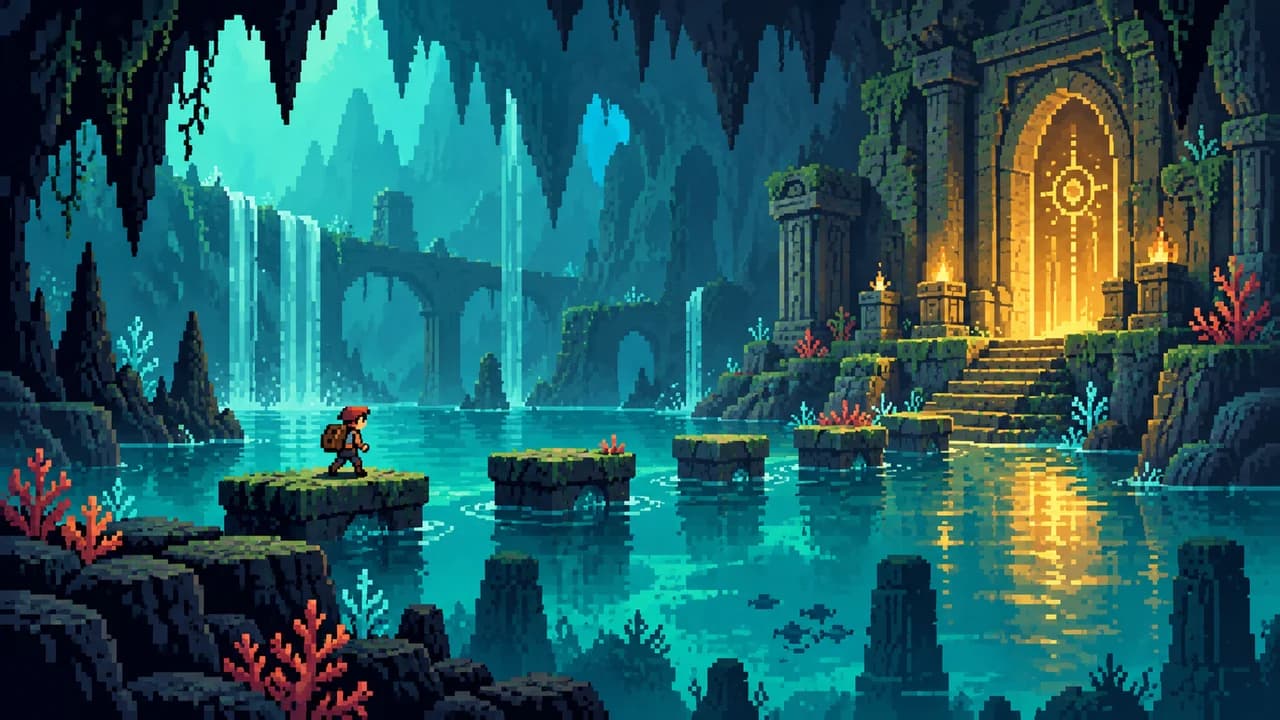
Aligned color blocks and a small palette explain the character, the ground, and the danger. Clarity comes from silhouettes and a few keyframes, not from tiny brushwork.
Traits
- The outline is readable before the details, even on a small screen
- Shadows are usually a deeper step of the same hue
- A few keyframes, flashes, and landing dust matter more than gradients
- A pixel grid makes footing and collisions look honest
Play that fits
It suits platform jumps, short action levels, and tile maps. The rules can be rich if the information still fits in tiles.
Reference games
Make a coherent game art set
Suggested asset specification
- Character: sprites on one pixel grid
- Scene: tiles and separate foregrounds
- UI: grid-aligned icons and clear text
Motion and feedback
Use key poses and pixel-aware movement; scaling must preserve a consistent grid.
Main production effort
Animation frames, character variety and tile counts drive cost; small pixels are not automatically cheap.
Start with this small scene
Start with one sprite, ten reusable tiles and three item types on a locked grid/palette.
Simplify for a smaller budget
Reduce characters and actions, prioritizing idle, movement and interaction states.
What to check
At the actual display scale, check edges, collision cues, UI and animation against the same grid.
Related subdirections
These directions sit within their parent entry and do not increase the main style count.
Monochrome pixels
Separate goals with shape and two values before texture.
Gato Roboto ↗8-bit-inspired pixels
Set pixel scale and a limited palette without claiming exact console constraints.
Shovel Knight: Treasure Trove ↗16-bit-inspired pixels
Richer ramps still need consistent light, tiles and actor scale; bit depth is a historical reference.
Sonic Mania ↗Dense pixel illustration
Budget sprite dimensions multiplied by frame count, focusing detail on the main subject.
Owlboy ↗Luminous pixel art
Assign highlights to understandable hazards and goals while preserving unlit hierarchy.
Hyper Light Drifter ↗Tile-based pixel scenes
Check tile joins, walkable edges and decoration separately; a top-down camera is not a new style.
CrossCode ↗Coarse minimal pixels
Support fewer pixels with poses, audio and text; low resolution does not guarantee less effort.
The Last Door - Collector's Edition ↗
Take the art specification
Includes localized visual rules, asset suggestions, scope and sources. This is a specification; assets still need production for your project.
Art specification v1 · Original editorial and examples · Reference-game assets not included
Prompt examples
Side-view pixel coral cave, a small diver, at most twenty-four colors, crisp dark outline, one-pixel highlights, readable silhouette, no blur, no text
Top-down pixel town at dusk, tiled roofs, warm windows and cool shadows, a character made of a few blocks, clean frame
Common pitfall
A pixelation filter does not replace a deliberate grid and readable silhouettes.
Observations and sources
Cases refer to public documentation. Developers and community wikis are credited separately; document review is not a claim of hands-on testing.
- Celeste
Observe character, hazard and landing separation at small pixel sizes.
- Hyper Light Drifter
Observe bright accents separating characters and attacks from complex scenes; palette limits alone do not define pixel art.
Brief for the studio
Opens the AI studio with the brief below in the input. You can edit it. Nothing starts automatically.
Make a one-minute side-view pixel game: move, jump, cross bricks that vanish, collect three star coins, and reach the exit. Use a limited palette and clear silhouettes, with touch buttons for a phone.
Related entries
Limited dither
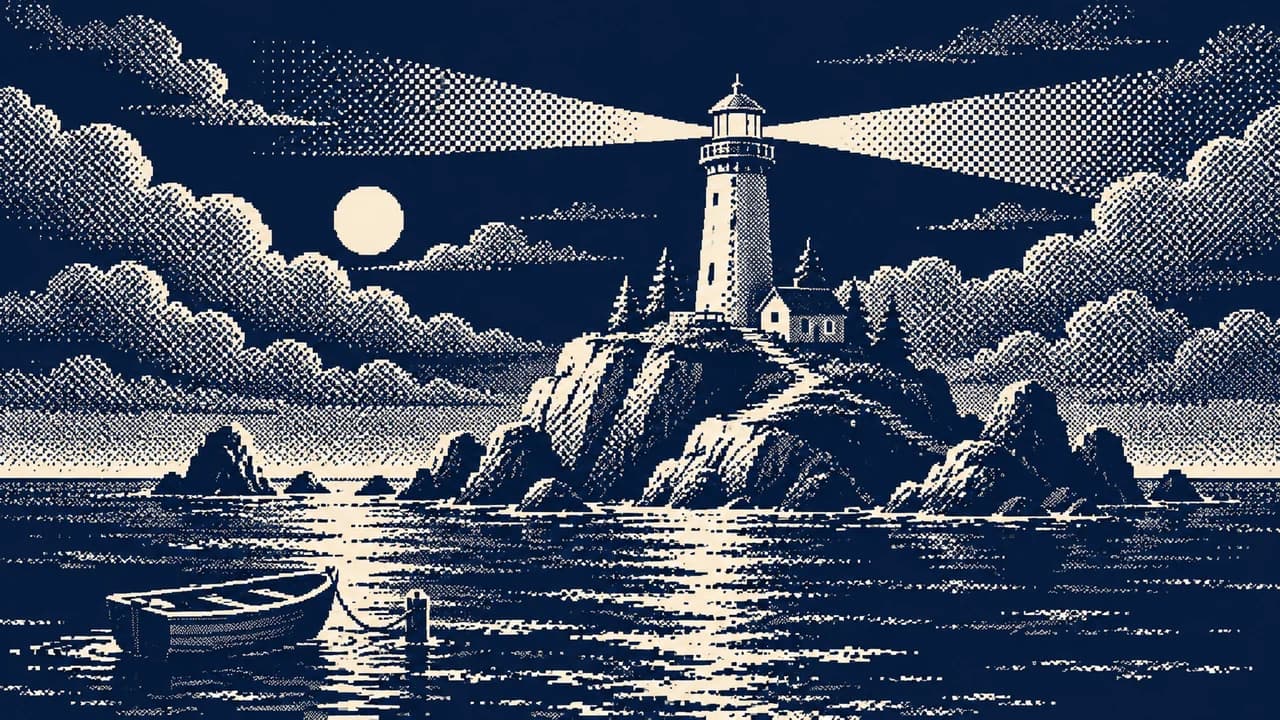
When there are too few colors for a gradient, a fixed dot pattern mixes two of them into a middle tone. The texture comes from the limit, and shadow has a pattern.
Monochrome silhouette
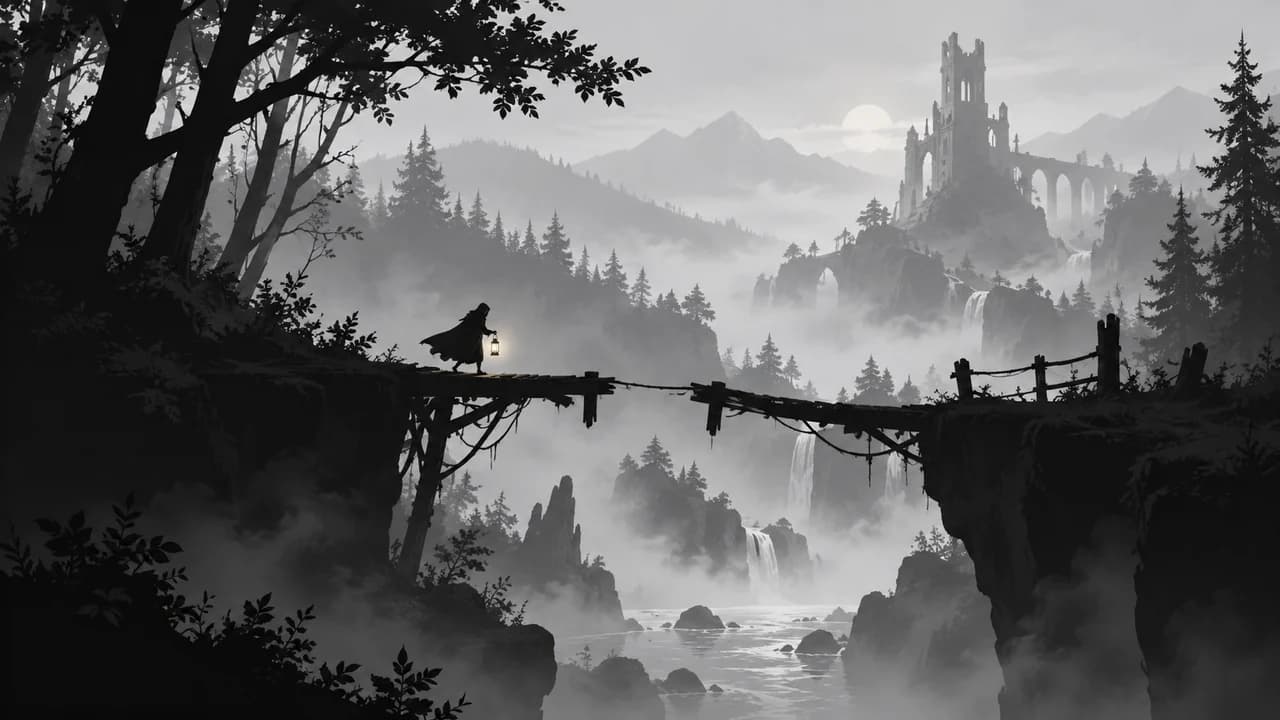
Value and outline explain space before a few fog layers add distance. With very few colors, the character, usable edges and hazards must still be instantly distinct.
Minimal geometry
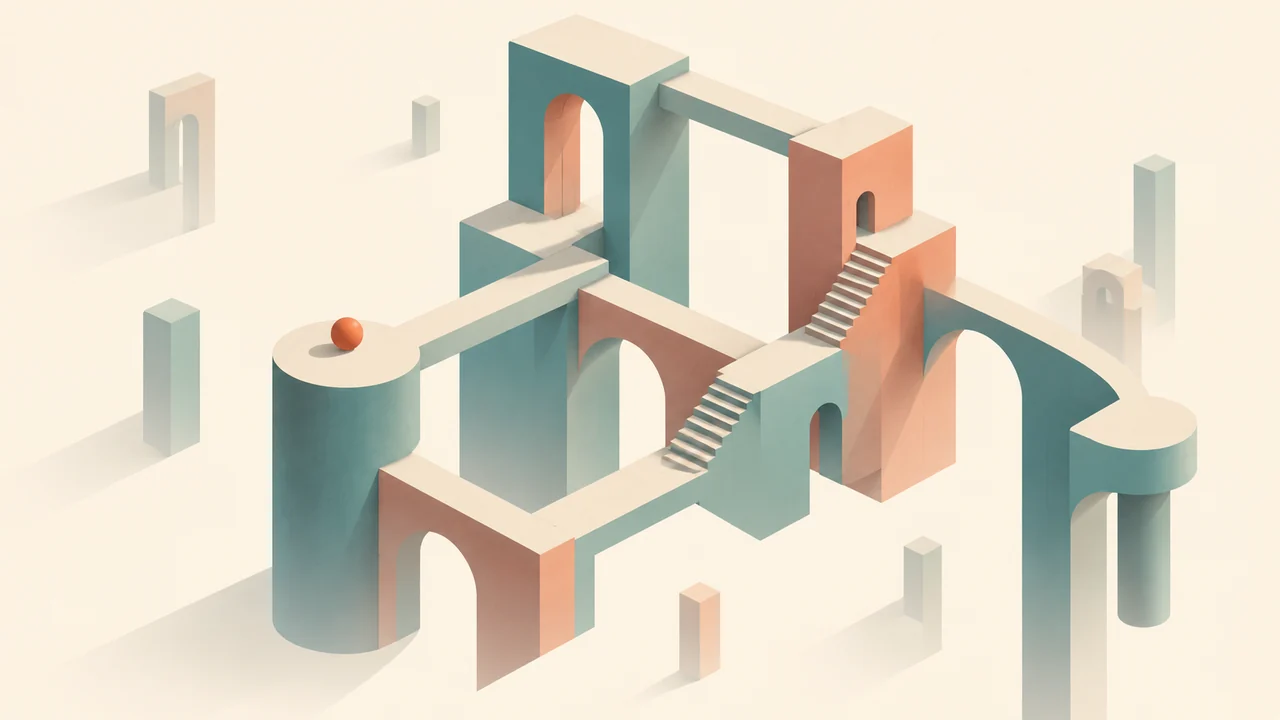
Use circles, squares, lines, and a few colors. Every shape needs a job. Decoration that does not help a decision comes out.
Covers are original AI-generated style illustrations. Game names reference publicly visible design choices and remain the property of their owners. This atlas does not supply screenshots or assets from those games. Prompts and combinations are original drafts for new games.